
In NSW, the property owner is responsible for a private power pole, along with the powerlines and pole-top fittings beyond Ausgrid’s connection point, while Ausgrid looks after the network in the street. If Ausgrid finds a bushfire risk on that pole, it can issue a defect notice that starts a legal deadline for the repair. That repair or replacement is Accredited Service Provider work, and the owner pays for it.
The NSW Bush Fire Danger Period began on 1 October, and Ausgrid’s free yearly patrols of private poles in bushfire-prone areas don’t replace the annual inspection it expects owners to arrange themselves. Restore Electrical holds Level 2 ASP accreditation 6611 and replaces private poles identified in Ausgrid defect notices across the Central Coast and Hunter. This guide covers ownership, inspections, the 30-day and 60-day deadlines, warning signs, Ausgrid’s cost estimates and your options.
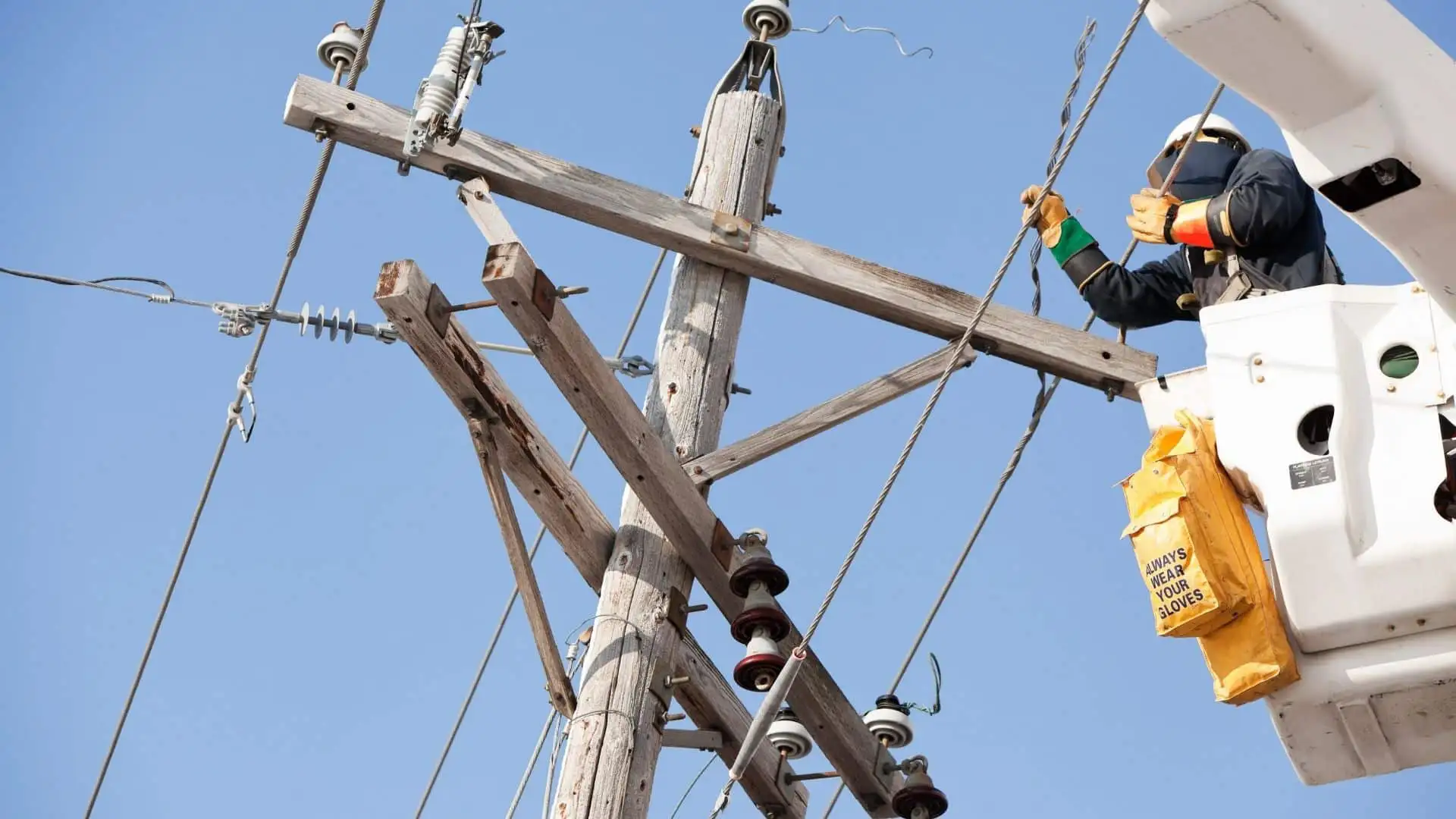
Private Power Pole Ownership in NSW and the Central Coast
Whose pole is it, yours or Ausgrid’s? For some owners, the answer arrives in a letter saying the pole in the yard is theirs to fix.
Ausgrid’s private poles guidance makes owners responsible for every private power pole, powerline and pole-top fitting beyond Ausgrid’s connection point, while Ausgrid maintains its network in the street. Your part runs from the first point of connection on the property, such as a private pole, to the switchboard or meter.
Ownership goes beyond the pole you can see. Going by Ausgrid’s FAQ, the owner looks after:
- The pole itself: timber or steel, from the base to the top.
- Pole-top fittings: cross-arms and insulators, which Ausgrid counts as part of your consumers’ mains.
- Overhead lines on the property: the private wires past the connection point, including sub-mains feeding a pump or shed.
- Other names you may see: overhead private and shared mains, or aerial consumers’ mains, all describe the same poles and wires.
Tenants should forward any notice to the owner or landlord, because complying is the owner’s job. On a shared easement, Ausgrid’s notice rules send a notice to every property where the defect sits and leave neighbours to arrange the repair between them.
Faults along that run fall under overhead powerline services, and on the Ausgrid network across the Central Coast and Hunter, ownership gets real the day a defect notice arrives.
More: Damaged Service Lines: What It Means and How to Fix It
Private Pole Defect Notices and NSW Deadlines
The deadline on a private pole defect notice comes from the Electricity Supply Act 1995, not Ausgrid policy. Within 30 days of the notice, the owner must notify the network operator that the work will be done within 60 days, or ask for the supply to be disconnected. These rules apply only on bush fire prone land, and the owner pays for the repair.
Ausgrid’s private poles page lists the usual triggers for a notice, from trees growing close to powerlines and wires that touch to rotting, rusting or leaning poles. The warning signs section below walks through each one.
With no confirmation after 30 days, Ausgrid’s follow-up process starts, and after 60 days it may enter the property to disconnect the supply until repairs are finished. An immediate risk to life or property can mean disconnection straight away. Ausgrid also has a hardship policy for customers who pay it directly.
If the owner doesn’t comply, the same Act lets the network operator do the work and recover the reasonable cost as a debt. Cost disputes go to the Energy and Water Ombudsman NSW, and deadlines can be extended by written notice.
Installation safety defects are a separate notice type: on Ausgrid’s safety defects page, defects not repaired within 21 days of notification may lead to disconnection. Booking defect notice repairs early keeps you on your own timetable, because a missed deadline can end in disconnection or a bill for work you didn’t choose.
Private Pole Inspections Before the Central Coast Bushfire Season
You don’t have to wait for Ausgrid’s patrol to find out where your pole stands. According to the NSW Rural Fire Service, the statutory Bush Fire Danger Period runs from 1 October to 31 March, although it may vary with local conditions.
Private pole checks come in three layers, and two of them are the owner’s to arrange:
Ausgrid’s Free Annual Patrol
Each year, ahead of the danger period, Ausgrid runs visual above-ground inspections of private poles and overhead lines in bushfire-prone areas. Ausgrid’s FAQ confirms the patrol is free and that recently installed poles are patrolled too. You don’t need to be home for it.
Your Own Yearly Inspection
The patrol is a visual check, and Ausgrid also expects owners to arrange an annual bushfire inspection plus a regular detailed inspection. Book it before each bushfire season, after major storms or whenever you suspect damage. Your council or the RFS can confirm whether your land is bush fire prone.
Below-Ground Checks at the Base
Inspectors need access to the ground zone around a pole to a depth of 250 mm, according to Ausgrid’s inspection guidance. Concrete around the base can mask internal corrosion in steel poles or decay in timber ones. Poles with concrete blocking inspection get flagged as potential bushfire or safety defects, so the base matters as much as the top.
Our licensed team inspects overhead lines, poles and connection points. Book that check now, before a defect notice sets the timetable for you.
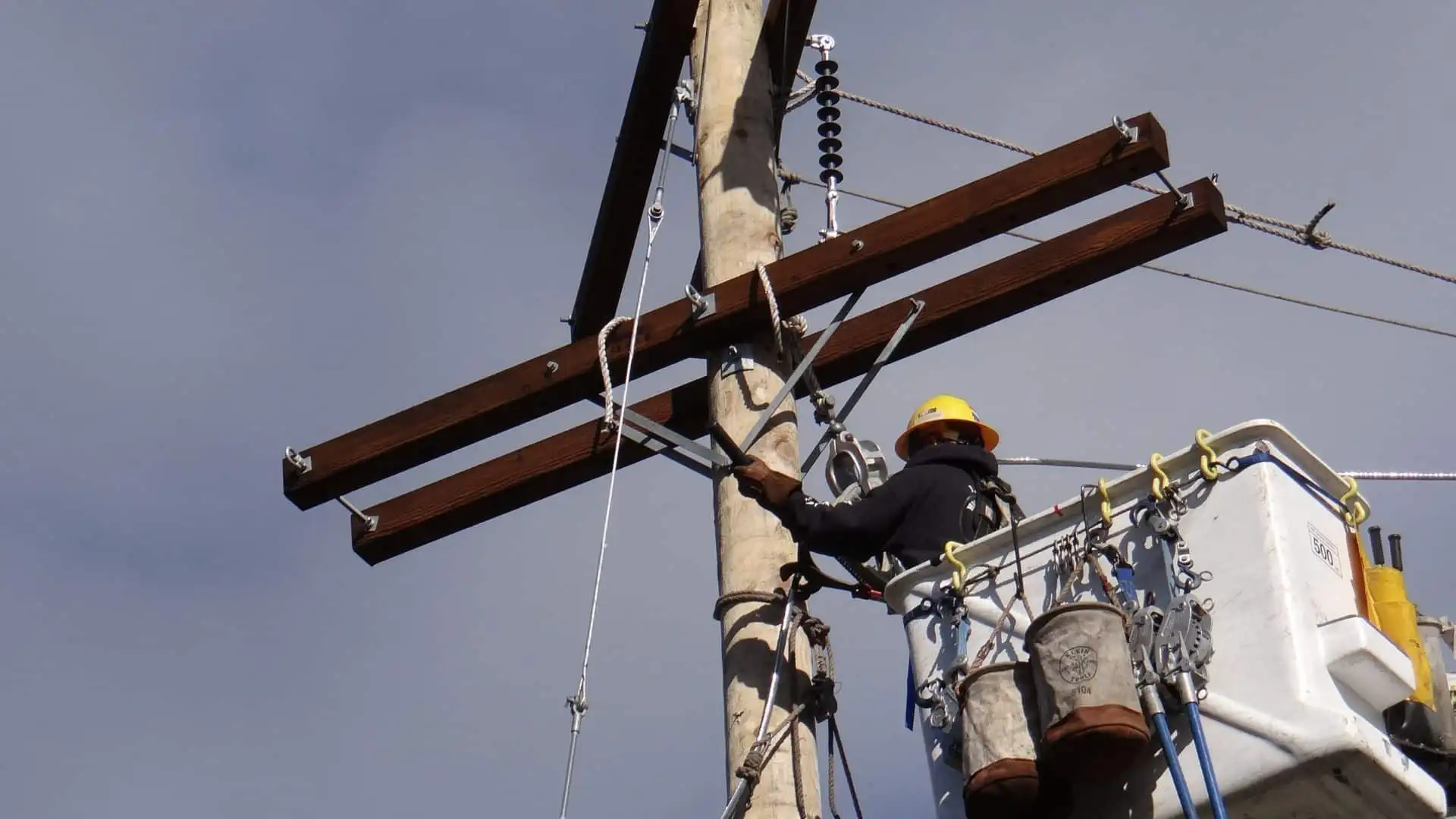
Warning Signs and Repair Costs for Private Power Poles
Termites, wood rot and rust can all cause serious structural damage to a private pole, according to Ausgrid’s private poles FAQ, and the repair bill lands with the owner.
Ausgrid’s list of common defects tells owners to organise repairs as soon as they notice one, so watch for these from the ground:
- Rot, rust or termite damage: Ausgrid recommends a registered pest controller treat any termite-infested pole.
- A leaning or split pole: any unsafe pole must be replaced by an Accredited Service Provider.
- Touching, frayed or slack wires: including lines without the required ground clearance.
- Damaged cross-arms or fittings: both cross-arm and insulator replacement appear in Ausgrid’s estimates below.
- Trees close to the lines: a tree trimmer handles these, with an ASP isolating the power if it needs to be off.
Ausgrid also publishes indicative repair estimates, and these are Ausgrid’s figures, not any contractor’s prices:
| Work | Ausgrid’s estimated cost |
| Steel pole | $3,000 to $5,000 |
| Steel pole with meter box | $3,500 to $5,500 |
| Large timber pole | $7,500 to $14,500 |
| Large timber pole with meter box | $9,500 to $16,000 |
| Cross-arm replacement | $1,800 to $3,000 |
| Insulator replacement | $1,500 to $2,500 |
Ausgrid’s repair cost estimates are estimates only and don’t allow for difficult access or specialised equipment, or include extra costs such as service searches, design, traffic control or rock excavation. A cross-arm or insulator repair sits at the bottom of that range, while a large timber pole can cost several times as much. That gap is when private pole replacement becomes the real conversation.
Replacing a Private Pole or Going Underground in NSW
Does a failing pole have to be replaced with another pole? Not always, but Energy NSW says private poles needing inspection or replacement, and a switch from overhead to underground supply, are work only ASPs can carry out. Under the NSW ASP scheme, Class 2C of Level 2 accreditation covers overhead services.
Ausgrid’s guidance says to give your contractor the defect notice so every item gets repaired. Afterwards, email the paperwork, such as the CCEW and Notification of Service Work, with photos to privatemains@ausgrid.com.au. The repair itself can take one of three routes:
- Like-for-like replacement: a new pole takes the old one’s place, and we install both timber and galvanised steel poles.
- Underground supply: where a tree poses a bushfire hazard, Ausgrid names underground supply as one option, and that’s underground powerline work for an ASP.
- Ausgrid does the repair: if you can’t secure a qualified contractor, Ausgrid will do it on request, but you pay.
Where a pole or its wires come down, Ausgrid’s fallen powerlines advice is to stay at least 8 metres, or 2 car lengths, away and call 13 13 88. Never climb the pole or try a repair yourself. For urgent work on your side of the connection, a 24/7 emergency electrician can attend after hours.
More: Why a Level 2 Electrician is Essential for Mains & Metering Work
Conclusion
The Bush Fire Danger Period is under way, which makes October the month to deal with a private pole. Everything past Ausgrid’s connection point, from the pole to its fittings and wires, is the owner’s to maintain and fund. Ausgrid’s annual patrol costs nothing, yet Ausgrid’s private poles FAQ still expects owners to book a yearly bushfire inspection and a detailed check of their own.
A defect notice turns that expectation into a deadline. Under the Electricity Supply Act, you have 30 days to confirm the work will be done within 60 days, or to request disconnection instead. Because repairs and replacements are ASP work, line up an accredited contractor early and keep the compliance paperwork ready for Ausgrid.

Areas We Service
Private pole inspections and replacement are available across Hunter Valley, Kurri Kurri, Cameron Park, Lake Macquarie, Port Stephens, Raymond Terrace, Blue Haven and Lake Munmorah. That includes poles named in Ausgrid defect notices, emergency replacement and complete removal and disposal of the old pole, with a Certificate of Compliance issued for the work.
Book a Private Power Pole Inspection on the Central Coast
If a defect notice has arrived, or you’d like the pole checked before the next patrol, call Restore Electrical on 02 4006 8326 for an assessment and a clear fixed-price quote. Book online for $50 off your first service, with:
- $0 call-out fee
- Free fixed quote before work starts
- Level 2 ASP accreditation 6611
- Lifetime labour warranty
- 24/7 emergency service for damaged poles and lines
Frequently Asked Questions About Private Power Poles
Who owns the power pole on my property in NSW?
The property owner does, if the pole sits beyond Ausgrid’s connection point. That covers the pole, its pole-top fittings and the private powerlines, while Ausgrid maintains its network in the street.
How long do I have to fix an Ausgrid defect notice on a private pole?
For a bushfire defect notice, you have 30 days to tell Ausgrid the work will be finished within 60 days of the notice, or to ask for disconnection. Ausgrid can extend that period in writing.
What happens if I ignore a private pole defect notice?
After 30 days Ausgrid follows up, and after 60 days it may disconnect the supply until repairs are done. It can also do the work itself and recover the reasonable cost from you.
How much does it cost to replace a private power pole?
Ausgrid’s indicative estimates run from $3,000 to $5,000 for a steel pole and up to $16,000 for a large timber pole with a meter box. The estimates exclude difficult access, design and rock excavation.
Do I need a Level 2 electrician to replace a private pole?
Yes. Energy NSW lists private pole inspection and replacement as work only Accredited Service Providers can do, and Ausgrid refers owners with pole defects to the Level 2 (ASP/2) contractor list.
Does Ausgrid charge to inspect my private power pole?
No, Ausgrid’s annual bushfire patrol of private poles is free. It still expects owners to organise their own annual bushfire inspection and a regular detailed inspection.